
Ceramic recyclates
At KMK GRANIT, we believe that even recycled materials can be the beginning of a new story - a story of responsibility, innovation, and respect for nature. Our ceramic recycling technology transforms waste into raw materials that help reduce environmental impact and protect our planet.
Recycled ceramic materials help reduce the extraction of new raw materials and energy consumption of mixtures while maintaining the required functional characteristics.
- modification of rheology and sintering of ceramic bodies
- stabilization of body properties during firing
- possibility of exchange expensive fired refractory raw materials or corundum
- replacing burned raw materials saves energy and CO₂
Currently, KMK GRANIT supplies its recyclates to customers in the Czech Republic, Italy, Germany, Poland and Slovakia.
Our products
Fired aluminosilicate
grog RFR 65
Fired aluminosilicate grog (or chamotte) having a stable crystalline composition with a firing temperature of 1500 °C, containing at least 65% Al2O3, refractoriness min. 1700 °C
Fired aluminosilicate
grog PLA
Fired aluminosilicate grog (or chamotte) having a stable crystalline composition with a firing temperature of 1250 °C, containing at least 21% Al2O3, refractoriness min. 1490 °C
Fired aluminosilicate
grog IZ 45
Fired aluminosilicate grog (or chamotte) having a stable crystalline composition with a firing temperature of 1400 °C, containing at least 45% Al2O3, refractoriness min. 1700 °C
Fired aluminosilicate
grog IZ 35
Fired aluminosilicate grog (or chamotte) having a stable crystalline composition with a firing temperature of 1340 °C, containing at least 35% Al2O3, refractoriness min. 1620 °C
Fired aluminosilicate
grog IZ 20
Fired aluminosilicate grog (or chamotte) having a stable crystalline composition with a firing temperature of 1340 °C, containing at least 21% Al2O3, refractoriness min. 1520 °C
Client reviews
Behind every project are people and their trust. We greatly value cooperation with our clients and their feedback. Learn about the experiences of our clients who have placed their trust in us.

Circular economy in practice: ceramic waste as a valuable resource
The reprocessing of ceramic products represents a modern approach that combines technical progress with the principles of sustainable development. Although ceramics are a very durable material, their long lifetime and inability to biodegrade mean that waste from ceramic products remains in the environment for hundreds or even thousands of years. Recycling and reuse are therefore a key step towards reducing the environmental impact.
Recycled ceramic shards can be used in the production of ceramic materials to replace raw materials that would otherwise have to be mined, processed, and fired at high temperatures to produce fireclay aggregates. The use of recycled materials with a high Al2O3 content (above 45 %) saves on the energy-intensive and expensive production of corundum.
Second life of ceramics
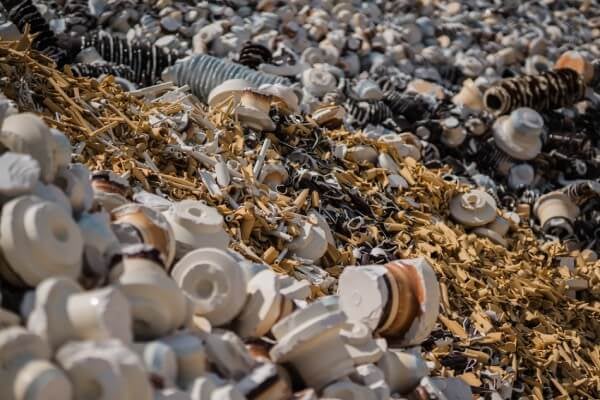
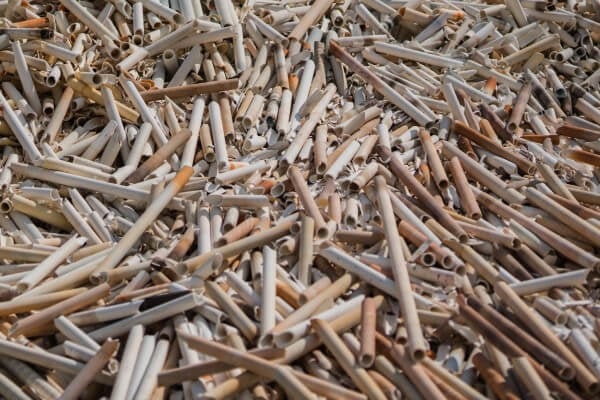
The production of new ceramics requires the extraction of raw materials such as clay, kaolin, quartz and feldspar. Reuse of ceramic shards makes it possible to partially replace primary raw materials, thereby reducing pressure on mining sites and limiting erosion or landscape damage. Ground and fine-ground ceramic shards ranging in size from 0.045 to 5.0 millimeters are suitable as grog in various refractory ceramic materials, where they positively affect the firing process and reduce shrinkage. Another option is returning recycled materials back to their production process in quantities of up to about 10%.
Ceramic waste makes up a significant part of construction and demolition waste. By using it as filler in concrete, as a base material or as part of new ceramic mixtures, the volume of waste deposited in landfills is significantly reduced. As a result, emissions of greenhouse gases arising from the decomposition of other materials or during the production of new raw materials are also reduced.
Ceramic shards with higher aluminum oxide content are used to a large extent due to their high refractory temperature in the production of chamotte and other refractory materials.
Recycled ceramics are also used in environmental technologies – for example as a filtration medium for water purification or as a drainage material for rainwater retention in cities. These applications contribute to improving microclimate, protecting water resources and adaptation to climate change.
Technical complexity with ecological purpose
From a technical perspective, ceramic recycling is more complex than metal or plastic recycling, but its benefit for the planet is indisputable. By integrating recycled ceramic shards into production processes, we achieve savings in energy, raw materials and CO₂ emissions, which is essential for achieving climate goals and long-term sustainable development of humanity.
KMK GRANIT – two decades of experience with closed-cycle production
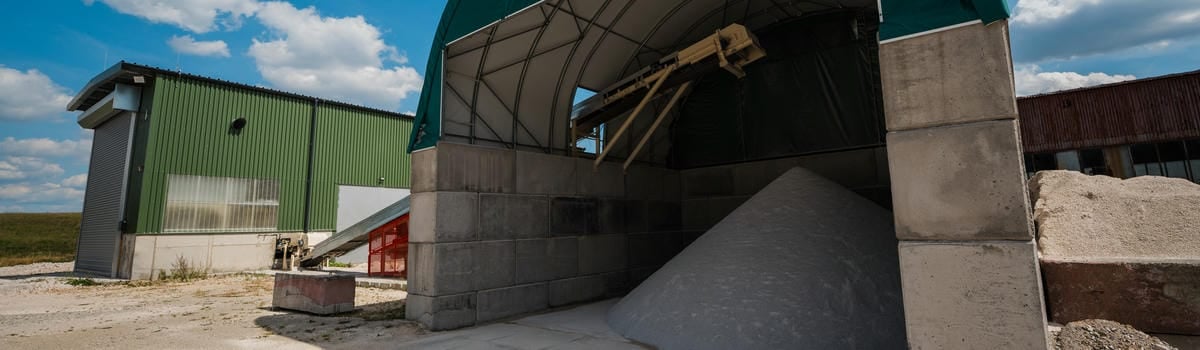
To limit the environmental impacts of primary raw material mining, KMK GRANIT has been dedicated for over twenty years to the reuse of waste materials from the ceramic industry.
In the first decade we focused mainly on the technology of sorting and removal of non-ceramic impurities, such as plastic or rubber parts and metal elements.
Since 2014, we have fully integrated our know-how into production processes, which today include:
Collection
and sorting
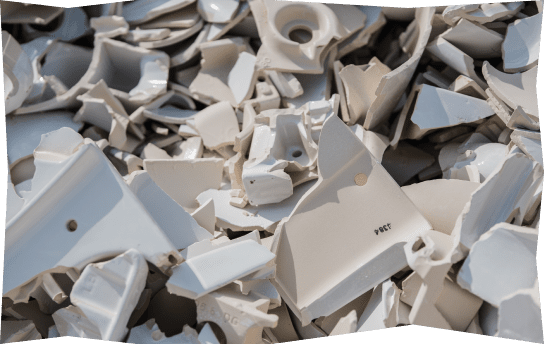
Ceramic waste is sorted by material type (porcelain, stoneware, tiles, sanitary ware). Non-ceramic impurities are carefully removed.
Mechanical
processing
Ceramics are crushed, ground and sorted by particle size. This creates high-quality recycled ceramic shards intended for further industrial use.
A small step for man, a great contribution to the planet
Every kilogram of recycled ceramics represents not only savings of raw materials and energy, but also a silent act in support of the planet's sustainability.
Every shard has its value.
Other materials
Feldspar materials
Sodium-potassium feldspar with high purity and stable composition for glass and ceramic industries.
More informationAggregate
Certified crushed aggregate from our own quarry for construction work, roads, and hardened surfaces.
More information